The Knowledge Bottleneck
One person carries critical knowledge. They're in one place at one time. They're overbooked, burning out, and when they leave, the knowledge goes with them.
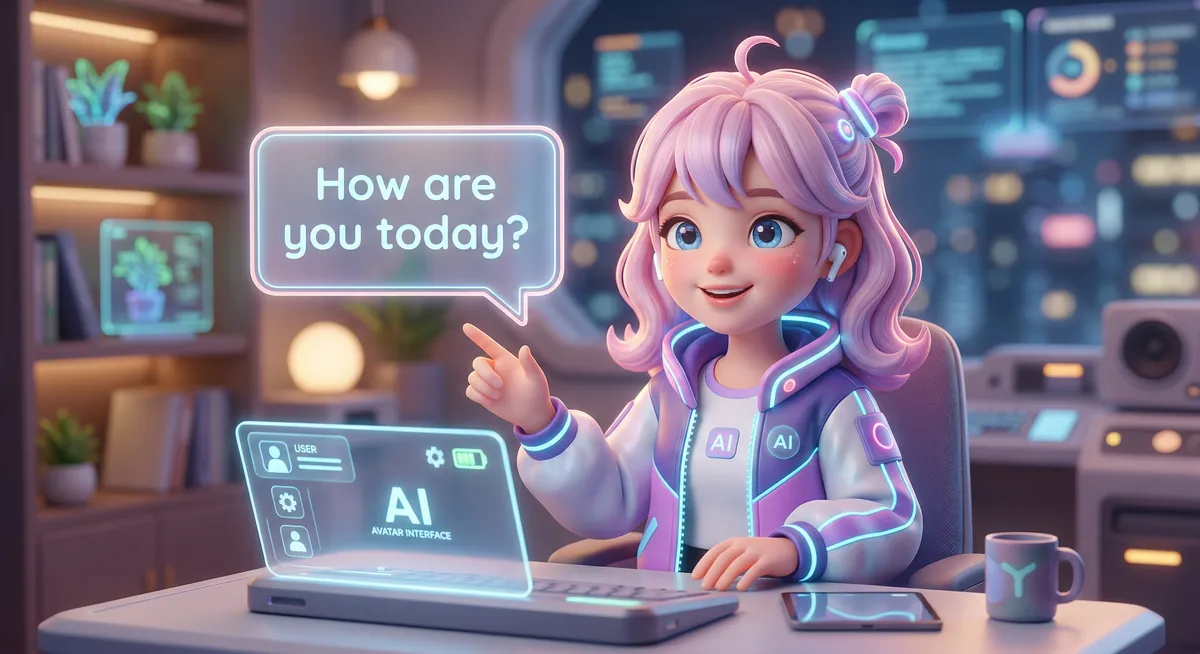
Interactive avatars change that. These aren't recordings or chatbots. They converse, answer questions in real time, and exist in multiple places 24/7. Your expertise scales.
Four Offices, Four Uses
Revenue
Always-on sales rep, customer success guidance, and product demos that never sleep. Customers get answers instantly.
Talent
Onboarding guidance, SOP Q&A, and recruitment screening. New hires learn faster. Hiring team screens candidates 24/7.
Operations
IT FAQ, HR policy questions, and process explanations. Employees get answers without waiting. Support tickets drop.
Innovation
Rapid prototyping of conversational experiences. Test ideas fast. No waiting for development cycles.
Real Talk: Limitations Exist
Latency is real. Knowledge boundaries depend on your data quality. Custom builds take hours to process. It's cloud-only. Analytics need improvement. But here's the thing: these limitations matter less than you think if you nail the fundamentals.
How to Build It (4 Steps)
Step 1: Create Persona
Define name, role, personality, and MBTI profile. This determines how your avatar communicates. Be specific. The better your persona definition, the more natural the conversations.
Step 2: Record Video
Two minutes total: 15 seconds listening, 90 seconds conversation, 15 seconds idling. This trains the avatar's motion and response patterns. Quality doesn't need to be Hollywood, but it needs to be clear and natural.
Step 3: Build Knowledge Base
Persona instructions, knowledge content, and prompt engineering. This is where the real work lives. Clear instructions, quality data, and proper prompting determine whether your avatar is useful or frustrating. A beautifully recorded avatar with poor knowledge data creates frustration. A technically imperfect avatar with rich, organized knowledge becomes genuinely useful.
Step 4: Test and Deploy
Embed via iframe. Start with internal teams. Gather feedback. Refine. Then roll out wider. Don't try to perfect everything upfront; iteration beats perfection.
Pricing That Makes Sense
Standard Avatar: $99/month. Pre-built, ready to deploy.
Custom Avatar: $149/month. Tailored knowledge, persona, deployment.
Economically viable for repetitive explanation roles that save time, reduce support tickets, or accelerate customer journeys.
The Core Principle: Data Quality Determines Everything
A beautifully recorded avatar with poor knowledge data creates frustration. A technically imperfect avatar with rich, well-organized knowledge becomes genuinely useful. Data quality determines everything.
This principle applies to avatars just like it applies to AI in general. Clear instructions. Quality data. Proper prompting. Get those right, and your avatar becomes an asset. Cut corners, and it's just another chatbot in the pile.
Real Use Cases That Work
Customer Success Avatar
Know your product specs, troubleshooting guides, and support policies. Answers customer questions instantly. Escalates to humans only when needed. Available every hour, every day.
Onboarding Avatar
Know your company processes, tools, policies, and culture. New hires get consistent, instant onboarding without waiting for one person to be available. SOP answers 24/7.
Sales Avatar
Know your pricing, features, case studies, and objection handling. Qualifies leads. Answers prospect questions during hours your sales team is unavailable. No opportunity missed due to timezone.
Hiring Avatar
Know your job requirements, culture fit criteria, interview process, and company overview. Screens candidates. Answers questions about the role. Removes work from your hiring team.
Internal Knowledge Avatar
Know your IT policies, HR processes, benefits, and company procedures. Employees get answers without filing tickets. Reduces support load. Everyone self-serves.
Ready to Scale Your Expertise?
Interactive avatars aren't the future. They're here now, and organizations that master them will outpace those that don't. Start with one use case. Learn the system. Expand from there.
The knowledge bottleneck is real. Your best people are tired. Your organization is fragile if one person leaves. Interactive avatars solve this. Not by replacing humans. By scaling the knowledge they carry.
Your expertise should be available everywhere. Not just when your expert is available. Build an avatar. Let it scale your knowledge. Then move to the next bottleneck.