TL;DR
- Goals don't fail because they're wrong. They fail because they stop showing up in conversation after the planning meeting.
- OKRs give you structure: a clear objective and measurable key results that tell you whether you actually moved.
- Cascade goals from organization to teams to individuals so everyone can see how their work connects to the same priorities.
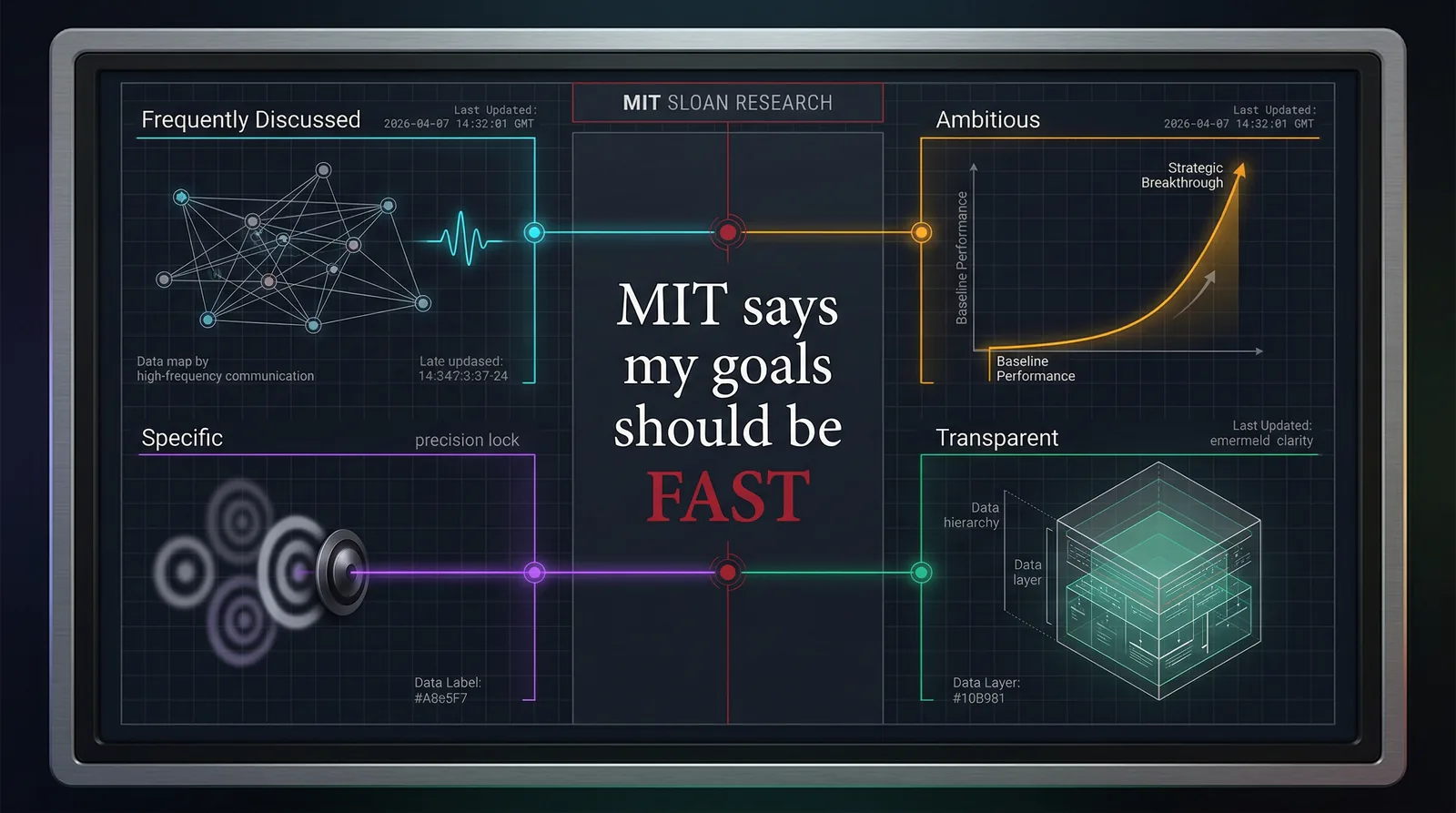
- FAST keeps the system alive: Frequently discussed, Ambitious, Specific, Transparent.
- AI handles the tracking layer at scale, so the leader stops being the system and starts using the system.
They haven't disappeared. They've just stopped mattering.
That's not a motivation problem. It's a systems problem. And there's a way to fix it. This post walks through two frameworks, OKRs and FAST, and how to use them together to build a goal system that actually drives behavior across your organization.
Start With the Objective
An objective is the direction. It's what you're trying to achieve.
It's not a task. It's not a number. It's a clear statement of where you want to go, simple enough that people can remember it and strong enough that it creates focus. A good objective answers one question: what are we trying to accomplish?
Instead of "run more campaigns," the objective is "become the market leader in customer experience." Instead of "improve the team," it's "build a culture where top performers stay." The difference is direction. The objective sets the destination. Everything else tells you whether you're getting there.
Define the Key Results
Key results are how you know if you're making progress. This is where things become measurable. Key results describe outcomes, not activities. They tell you whether something actually changed.
If the objective is to become the market leader in customer experience, a key result might be increasing customer satisfaction from 72 to 85, or reducing churn from 8% to 4% over the quarter. Those are outcomes. You can look at them and know whether you moved.
The trap most teams fall into is treating tasks as key results. "Launch a new campaign" is not a key result. "Hire three people" is not a key result. Those are actions. Key results measure the impact of those actions.
The test is simple: does this number tell you whether you actually got better at the thing that matters? If yes, it's a key result. If it just tells you that you did something, it's a task.
When you put objectives and key results together, strategy stops being abstract. You define what success looks like. You track whether you're getting there.
Cascade From Organization to Teams
Once the organizational priorities are clear, the next step is translating them into what each team actually does. This is where OKRs create real alignment, and where alignment usually starts to break.
At the organizational level, leaders set direction. The priorities are clear. Then those priorities move to teams, and interpretation begins. Marketing hears one thing. Product hears another. By the time it reaches individuals, people are working hard but not always in the same direction.
The fix is cascading. Each team looks at the organizational objective and asks one question: what do we need to deliver for this to happen?
Marketing might focus on acquisition. Product might focus on engagement. Sales might focus on retention or expansion. Each team contributes differently, but all of those contributions connect back to the same organizational objective. This is where alignment becomes real. It's no longer just a statement at the top. It's reflected in what each function is responsible for.
Connect Goals to Individuals
At the individual level, OKRs answer a very practical question: what is my role in all of this?
This is the step that creates ownership. Instead of working through a task list, each person understands the outcome they are responsible for. They can look at their goals and see how their work connects to the team and to the organization.
It also creates autonomy. When someone understands the outcome they're accountable for, they have freedom to decide how to get there. You don't have to manage every step. You manage the result.
When this works, alignment doesn't feel forced. It feels natural, because every level of the organization is connected to the same set of priorities.
Take a moment with this. Set one organizational objective. Write two key results. Then try to cascade it. If that exercise feels messy, you've found the gap. That's exactly where the work is.
Layer In FAST
OKRs give you structure. FAST keeps that structure alive.
FAST comes from research at MIT Sloan and stands for Frequently discussed, Ambitious, Specific, and Transparent. The insight behind it is straightforward: goals that live on paper don't change behavior. Goals that show up in conversation do.
People focus on what gets talked about. If goals only come up once a quarter, they won't drive much. If they show up every week in one-on-ones and team meetings, they start shaping decisions, priorities, and effort.
Use OKRs and FAST Together
OKRs and FAST solve two different problems. Put them together and you get something most organizations don't have: clarity and consistency at the same time.
Without FAST, OKRs become something you set and revisit at the end of the quarter, right before you set the next ones. The goals exist, but they don't drive behavior. They're a planning artifact, not an operating rhythm.
Without OKRs, conversations don't have a clear target. You can have great check-ins and still drift, because nobody is sure what success looks like.
When the two work together, you define what success looks like and you talk about it constantly. Goals become part of how the organization operates, not just how it plans.
Use AI to Keep the System Running
As organizations grow, maintaining this rhythm gets harder. More people, more goals, more conversations to track. Most leaders end up managing by memory, which means things fall through.
This is where AI becomes genuinely useful, not as a decision-maker, but as a support system.
AI can track progress across multiple goals without relying on memory. It can prepare performance conversations by summarizing what happened since the last check-in. It can surface patterns across a team that are hard to see when you're managing ten people at once.
Think about what takes the most time in running a good goal system. It's not setting the goals. It's staying connected to them: knowing where things stand, who needs support, what's blocking progress. AI handles that tracking so leaders can focus on the conversation itself.
Build the System, Not Just the Goals
Most organizations have goals. Few have a system that keeps goals alive.
The seven steps here are not complicated. Set a clear objective. Define measurable outcomes. Cascade them through the organization. Connect them to individuals. Keep them in conversation. Use AI to maintain the rhythm as you scale.
The discipline is not in setting the goals. It's in building the rhythm that makes them impossible to ignore. That's what allows an organization to move from intention to execution, consistently, quarter after quarter.
Build Your Operating System
The AI Officer Institute exists to build the leadership capabilities the AI era demands. If you want to learn how to install this kind of operating system inside your organization, earn your AI Officer Certification or join a weekly AI Coaching session.
Connect with executives who are already navigating this transition in the Leadership in the AI Era community, with leaders from 30+ countries sharing what's working.