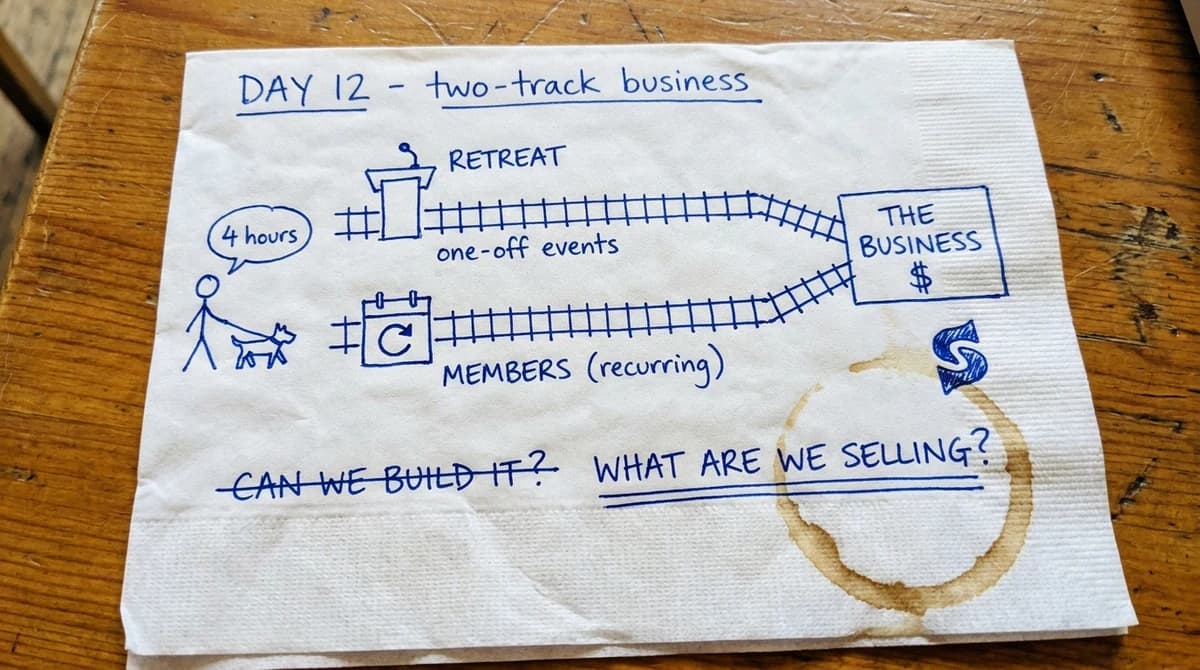
By the time the day was done, the business could take money. Two different ways. I also walked the dog, got a workout in, and wrote some content. The whole thing took about four hours.
I'm telling you that not to flex. I'm telling you because if you're a leader running a real business, your map of what a Sunday can hold is probably out of date. Mine was too, until this one.
What I actually built
Before I touched Stripe, I made a decision.
I wanted to sell two things.
Two tracks. The shape of a two-track business model. Different commitments, different journeys, same company. One for people ready to make a move in a weekend. One for people who know this is a year-long game.
Once I knew what I was selling, the build was almost boring. Claude Code handled the implementation. Stripe account. API keys. Environment variables. Workflows routing each purchase to the right place. A plan I reviewed before anything went live. A first test. It passed.
The CRM got updated too. I added the two tracks to the company database so that a member and a retreat attendee each show up correctly in my little system of the world. By the end of the day, I had a working billing stack and a CRM that matched the business I actually want to run.
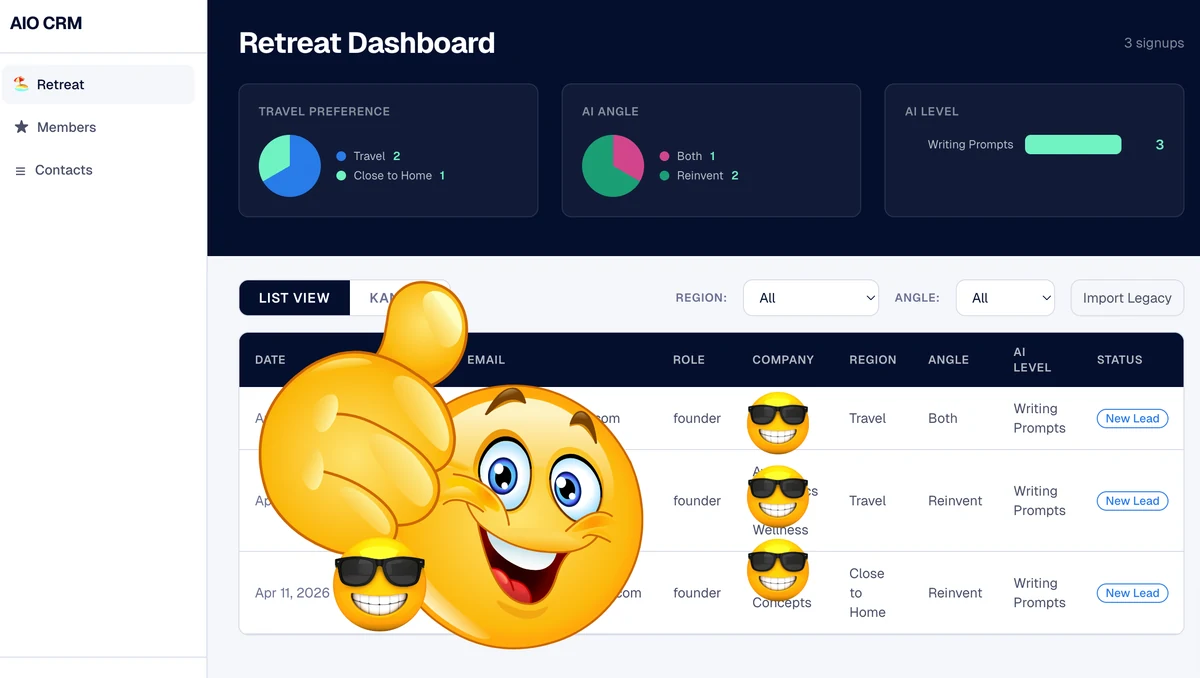
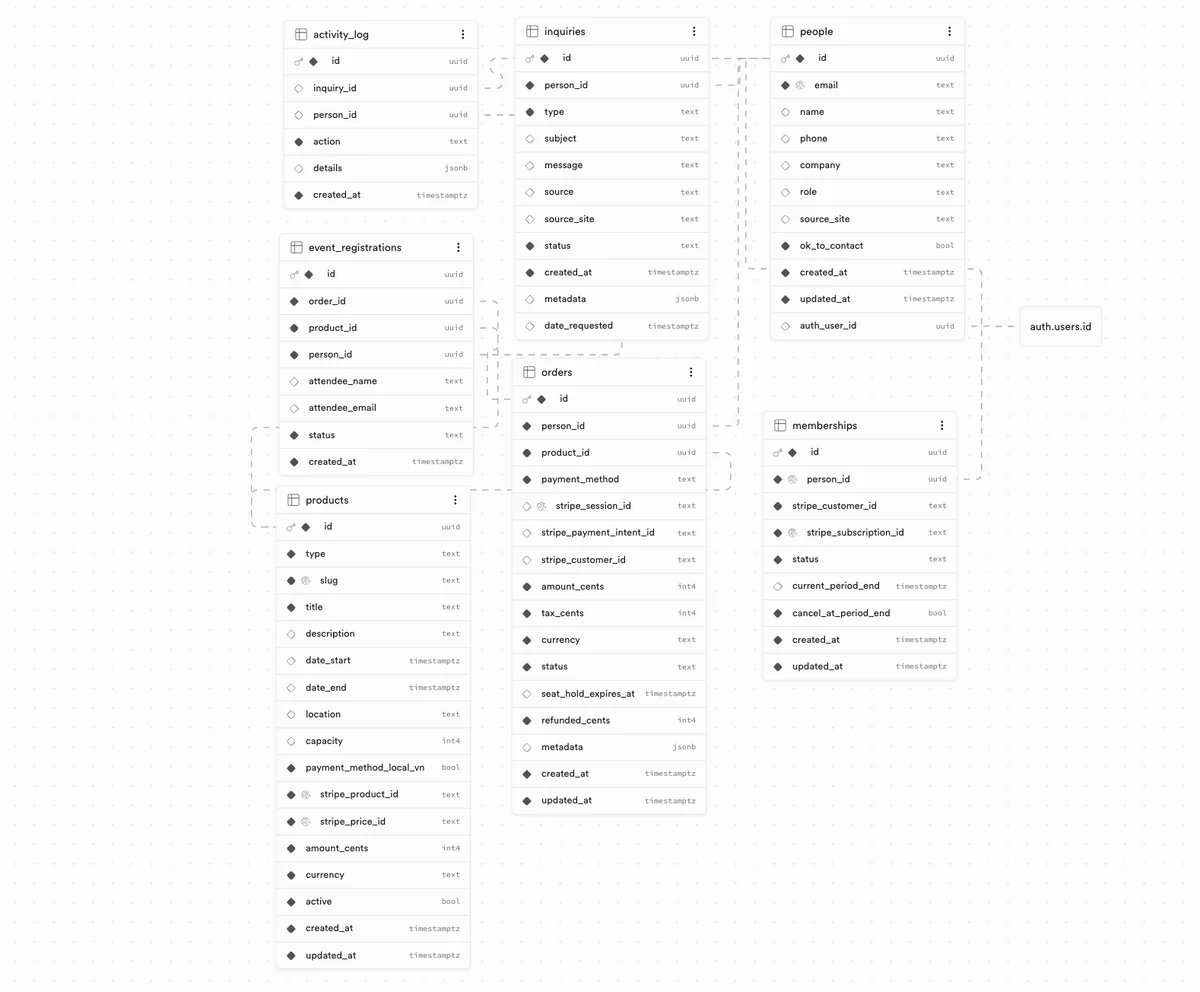
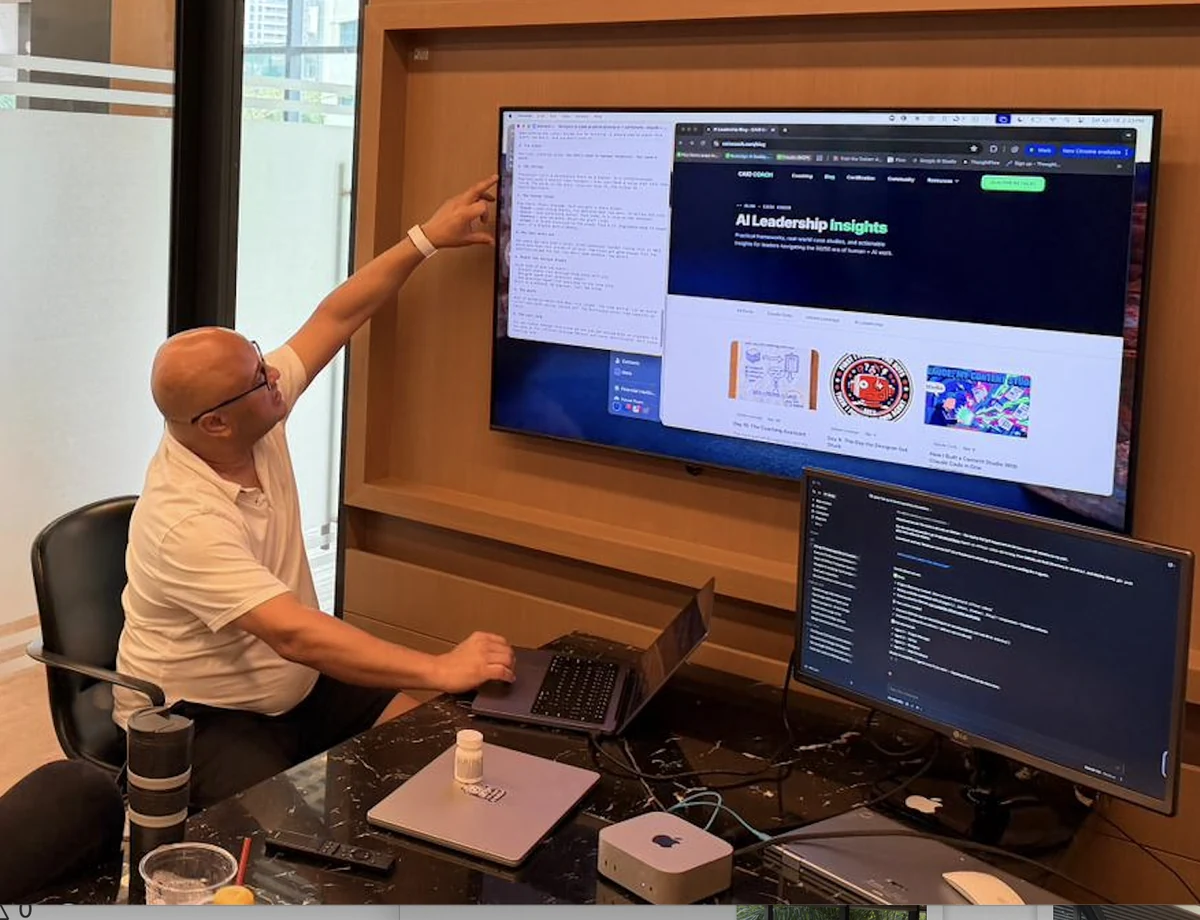
The weird part is how little of it I did with my own hands. Most of the work happened while I was out with the dog. The agents handled it. My job was to be clear about what I wanted, review the plan before it shipped, and run the test.
What actually changed
Five years ago, this same project would have looked completely different.
It would have started with a scoping doc. A vendor review. A few conversations with a developer, or a proper engagement with a dev shop. Six weeks, easy. A real chunk of budget. A steering committee, if the company was big enough to have one.
I'm not saying the old way was wrong. It was the only way, and it worked.
What I am saying is that the constraint moved. The thing that used to take weeks now takes an afternoon, as long as you're clear about what you want. And if you're not clear, no amount of developer hours is going to save you. You'll just build the wrong thing faster.
The question most leaders are still answering wrong
The old question, the one most leadership teams still burn meetings on, is some version of this. Can we build it?
Can we build a subscription product. Can we build a second revenue line. Can we build the automation finance has been asking for. Can we build the dashboard the board keeps mentioning.
That was the right question for a long time. It's not the right question anymore.
The real question is quieter and a lot harder. What are we actually selling, and to whom, at what level of commitment?
Notice that's not an engineering question. It's a coaching question. It's the kind of thing you work out with a thinking partner, not a Jira board. It's the kind of thing a sprint can't solve, because it isn't a sprint problem. It's a clarity problem.
Most leaders I coach are still treating the old question like it's the hard part. They haven't let themselves believe the build is almost free. So they don't run the experiments. They don't test the second track. They don't ship the member version because they're convinced it's a six-month project. Meanwhile, on some Sunday, somewhere, someone who figured out the new question is quietly pulling ahead.
Where Day 12 leaves us
Tomorrow the marketing team gets cleaned up. After that, outreach and customer service. Two more days to round out the series, and then a pause to see what 14 days of this actually compressed into.
But before you close the tab, here's the question I'd want to sit with if you and I were in the same room.
Not the one your team has been debating for a quarter. The one you've been quietly curious about and keep shelving. Write it down, even if it's half-baked. Especially if it's half-baked.
If you want a thinking partner while you work that out, that's what the coaching membership is for. You bring the half-baked idea. We get it sharper together, week after week. Become a member.
If you want to go faster and in person, the Infinite Leverage Retreat is in June. A few days, a small group, and you leave with your own two-track (or three-track) build sketched out and the first pieces already in motion.
Day 12 of 14
Two days left.
Twelve days in, the system doesn't just run. It takes money. It routes attendees and members into separate tracks. It updates itself while I'm out of the room. None of which was built by hand in the way that phrase used to mean.
Here's what I keep coming back to. The build being trivial isn't the interesting part. The interesting part is what that frees you up to care about. Positioning. Pricing. Who you're really for. What a weekend-level move actually looks like versus a year-long one. The stuff that used to get squeezed by the implementation tax is the whole job now.
That's a different kind of leadership muscle. And it's the one every founder I coach is figuring out how to grow.
Read next: Day 11: The AI Mindset Shift · Day 10: The Coaching Assistant · You Don't Need to Become Technical. You Need a Stack.
See you on Day 13.