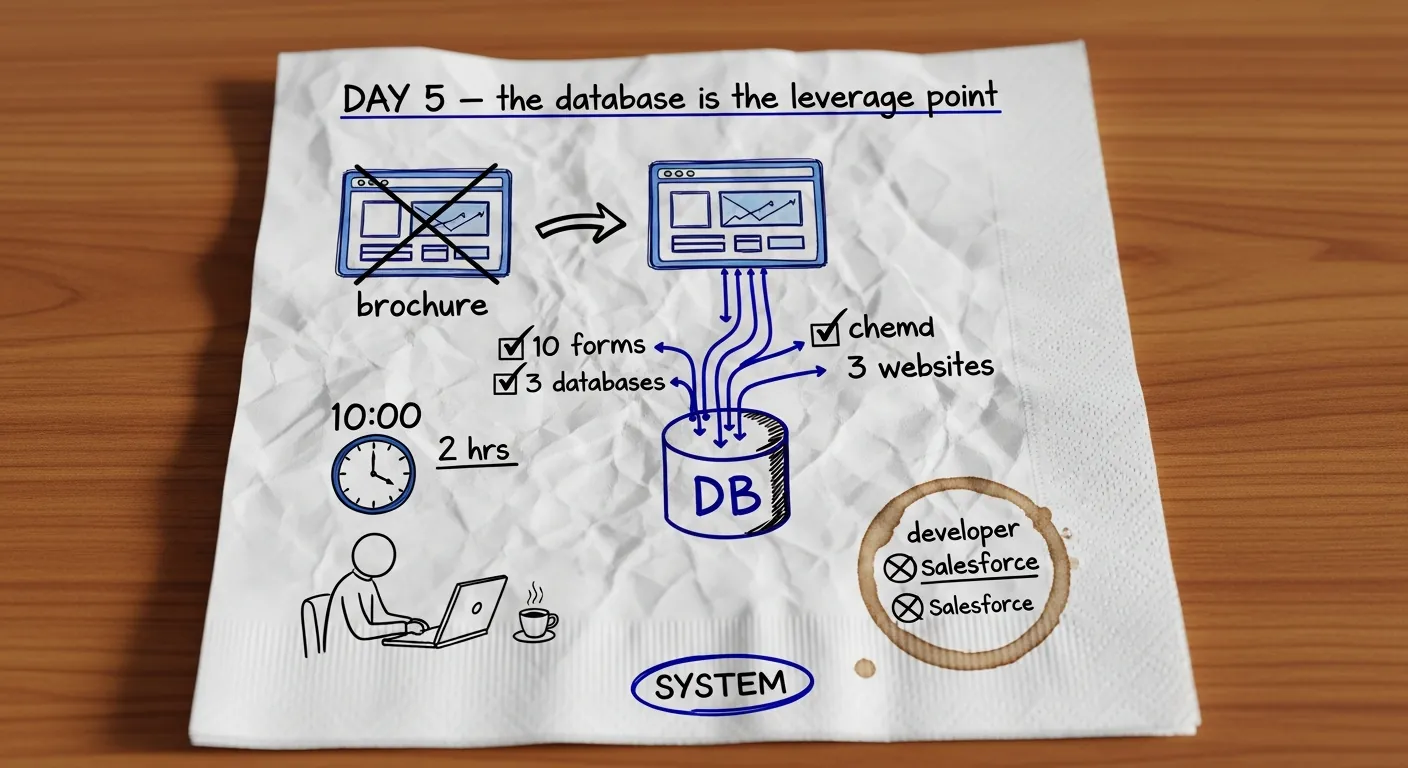
I opened Claude Code, dropped in the feedback, pointed it at some photos, and told it to connect the signup form to the database. Five minutes. Done.
Then I looked at the retreat participants page. It was not formatted well. I did not like it. So I told Claude to build a login function so people could go in and see who signed up. That took a few minutes. Still did not love it. So I made the list clickable. You tap a name, see all their details, and can update their status.
I looked at the clock. 10 AM. I had just built a mini CRM. Login. Participant list. Click-to-view details. Status management. The kind of thing that would normally require a developer, a database admin, and a few weeks of back and forth.
Most founders stop at the website. They build a beautiful homepage, maybe a contact form that sends an email, and they call it done. But the moment you connect a form to a database, everything changes. You go from publishing to operating. Now you are collecting information. Now you can track who signed up, what they are interested in, where they are in the process. Now you have a system.
Point 02: Three Sites at Once
This afternoon I worked on three websites simultaneously: ai-officer.com, mahjongtarot.com, and caiocoach.com. The focus was Supabase. Across the three sites, I created about 10 forms and 3 databases. Every form connected to a real database. Every submission captured and stored.
Here is what most people miss: working on three sites at the same time is not chaos. It is pattern recognition. Once you have connected one form to one database, you understand the pattern. Then you repeat it. Claude handles the repetition. You handle the decisions.
The only thing I did not get to was setting up the email triggers in Supabase. That is tomorrow's problem. The point is not perfection. The point is that 10 forms and 3 databases are now collecting real data from real users. None of them required a developer.
Point 03: Focus Is Harder Than Building
Yon spent the day doing critical work cataloging our information and deploying a writer agent. We have not fully nailed the process yet for using it, but the pieces are coming together.
We also worked with Jan to pull together past data and narrow our focus down to two core things we need to be cataloging: my dad's book and conversations with my dad. That is it. If we catalog those two things properly, the rest follows. We stick the writer into the working folder, point the designer at creating images, and we start auto-generating content. The book launch marketing starts to run itself.
Getting the team focused on that objective was harder than any of the technical work today. It is very easy to go off on tangents when you have powerful tools. The discipline is not in building. It is in choosing what to build.
Two things still aggravate me. First, setup. I was using two computers today and keeping them in sync properly is still friction. Second, GitHub configuration. It is getting better, but it is still not invisible. These are the kinds of problems that make non-technical founders quit before they get to the good part. The good part is what happened this morning. The bad part is the 30 minutes of setup friction that almost made me not start.
What We Actually Shipped
The compact version. No hero lap, no drama, just the list.
- Built a mini CRM for the retreat site. Login, participant list, click-to-view details, status management. Two hours.
- Updated retreat website based on feedback. Connected signup form to Supabase database.
- Worked on three websites simultaneously. ai-officer.com, mahjongtarot.com, and caiocoach.com. All three now have Supabase databases behind them.
- Created 10 forms across three sites. Every form connected to a real Supabase database.
- Set up 3 Supabase databases. All submissions captured and stored. Every site is now collecting real data from real users.
- Yon deployed the writer agent and spent the day cataloging information.
- Narrowed the catalog scope with Jan to two sources: the book and conversations with Dad.
- Did not get to email triggers in Supabase. Punted to tomorrow.
What's Next
Yon keeps refining the writer and designer agents. The goal is to start auto-generating content from the catalog. The book launch is the mission. Everything else is a tangent. Email triggers in Supabase are the first thing on tomorrow's list.
The Real Insight
The database is the leverage point. You can build websites all day. You can make them beautiful. But until you connect them to a database, you are just decorating.
The moment you add Supabase, or any database layer, your website starts working for you. It collects. It tracks. It remembers. It becomes a system instead of a sign.
Supabase makes this accessible. You do not need to understand SQL. You do not need to be a developer. You need to understand what a database does for you: it turns a static page into a living, working tool. That is the skill I keep coming back to when I think about what founders and executives need to learn. Not how to code. Just enough to know that connecting your frontend to a database is the difference between a brochure and a business.
Read next: Day 4: Embraced Claude Code · Day 3: The System Started Running · How to Build a 1-Person Company With AI